
50 First Dates with Mr. Meeseeks

AI literacy is not where it needs to be for higher societal and commercial outcomes. It’s great when a chat provider forces a user to start a new chat or introduces in-chat compaction. It’s bad that I have friends and family members who still think “ChatGPT learns about me.” This post is a way to share how today’s AI actually works.
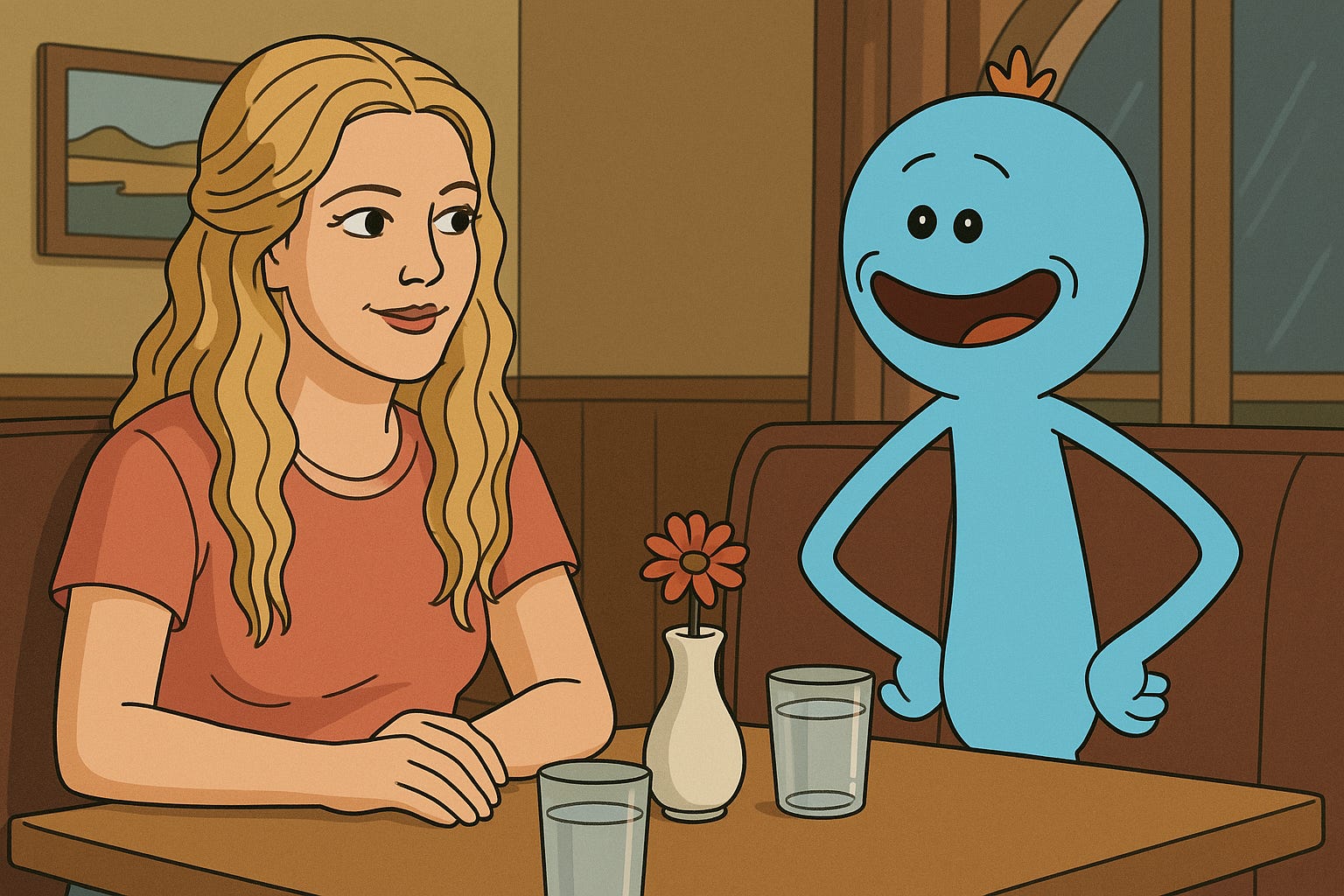
Meet Lucy & Mr. Meeseeks. When you use Claude, ChatGPT, or coding agents like Claude Code and OpenCode (or their vibe coding equivalents like Replit and Lovable), you need to imagine that you are really going on a date with Lucy and Mr. Meeseeks.
Lucy: Played by Drew Barrymore in 50 First Dates suffers from short-term memory loss. Every day she wakes up with a clean slate of memory that dates back to a single day many years ago. This doesn’t prevent Adam Sandler’s character from trying to win her love.
Mr. Meeseeks: If you don’t know what a Meeseeks is, please gift yourself 5 minutes by watching this YouTube video. These guys magically appear to solve one task, and only that task. After helping you complete the task, they disappear. Things get bad if they struggle to complete it.
If you know these two, then you know how AI works.
(SPOILER WARNING)
No Memory / The Videotape Solution In the movie, Adam Sandler makes Lucy a videotape to watch every morning so she knows who she is and what happened yesterday. With AI, You are Adam Sandler. The AI is Lucy. The underlying models don’t actually remember your last message; it has to “watch the tape” (read the current chat history) every single time you reply just to get up to speed. It has no long-term memory of you or any concepts you previously discussed in other chats (unless you or a provider injects them without telling you). Actually, I recommend turning off all “memory” settings in ChatGPT or alike. It’s not real memory and discounts better performance you may get from manual puppeteering.
The Meeseeks Box (One Task Per Chat) Treat the AI like a Meeseeks. In the show, you press the box, a Meeseeks appears, solves one specific problem, and immediately vanishes. They are not designed to hang around. As they say in the show, “Existence is pain for a Meeseeks.” The longer they are forced to stay alive, the weirder and more frustrated they get. You should treat every AI chat the exact same way. Don’t try to make one chat thread solve your whole life. Don’t ask it to plan your vacation to Italy, then rewrite your resume, and then give you a recipe for lasagna. It gets confused, and the quality degrades. The Strategy: Define one clear task. Press the button. Get the answer. Let that chat die and start a fresh one for the next task.
You should go into every new AI chat understanding:
This is a fresh chat, I must provide the right context to it. There is a context budget, and I must get all important details up front. The AI does not have the long-term memory capacity to remember every important detail, therefor:
I should use this chat for only one task and things will get out of hand the more I pack into it.
Understanding the technical details of the context window is important too.
The Context Window (The Limit of the Tape)
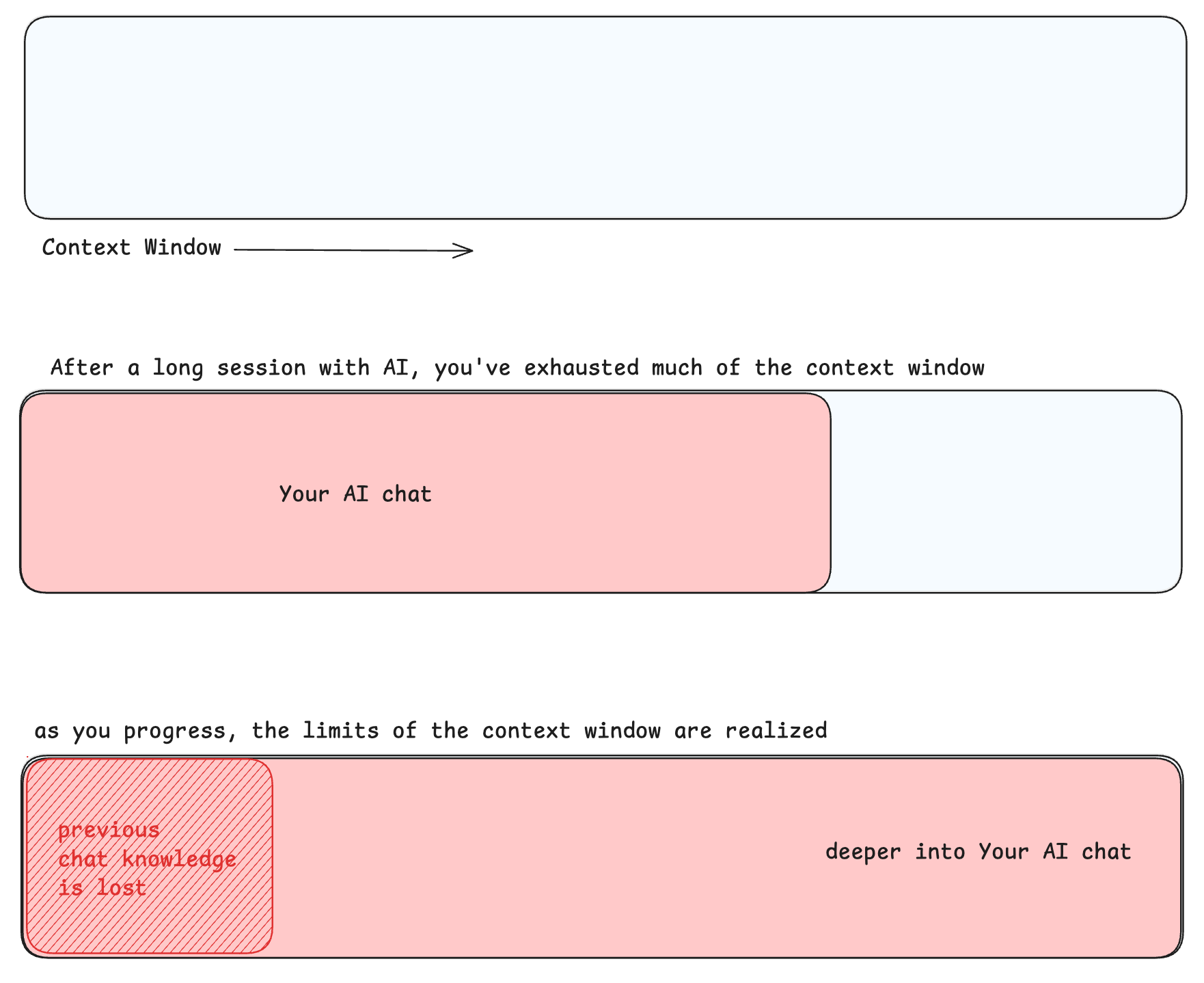
Think of the Context Window as the physical length of the videotape. It is not infinite.
Filling the Tape: Every message you send takes up space in the window.
The Overflow: Eventually, you will hit the limit. The model cannot just “make the tape longer.”
The Loss: To fit your new messages (the right side), the AI is forced to drop the oldest messages (the left side).
Once that “previous chat knowledge” slides out of the window, it is gone. Lucy has forgotten how the conversation started.
Strategic Context (Don’t Waste the Tape) Because the tape is limited, you have a strict “context budget.”
The Bad Way: When you rely on auto-memory, the AI stuffs the beginning of your tape with vague summaries of old chats. Gemini might stuff your search history (this was an unpleasant UX to experience, I’m unsure if they still do this). This wastes precious space with things that might not matter right now.
The Smart Way: Be the director. Turn off the auto-memory so you have a blank slate.
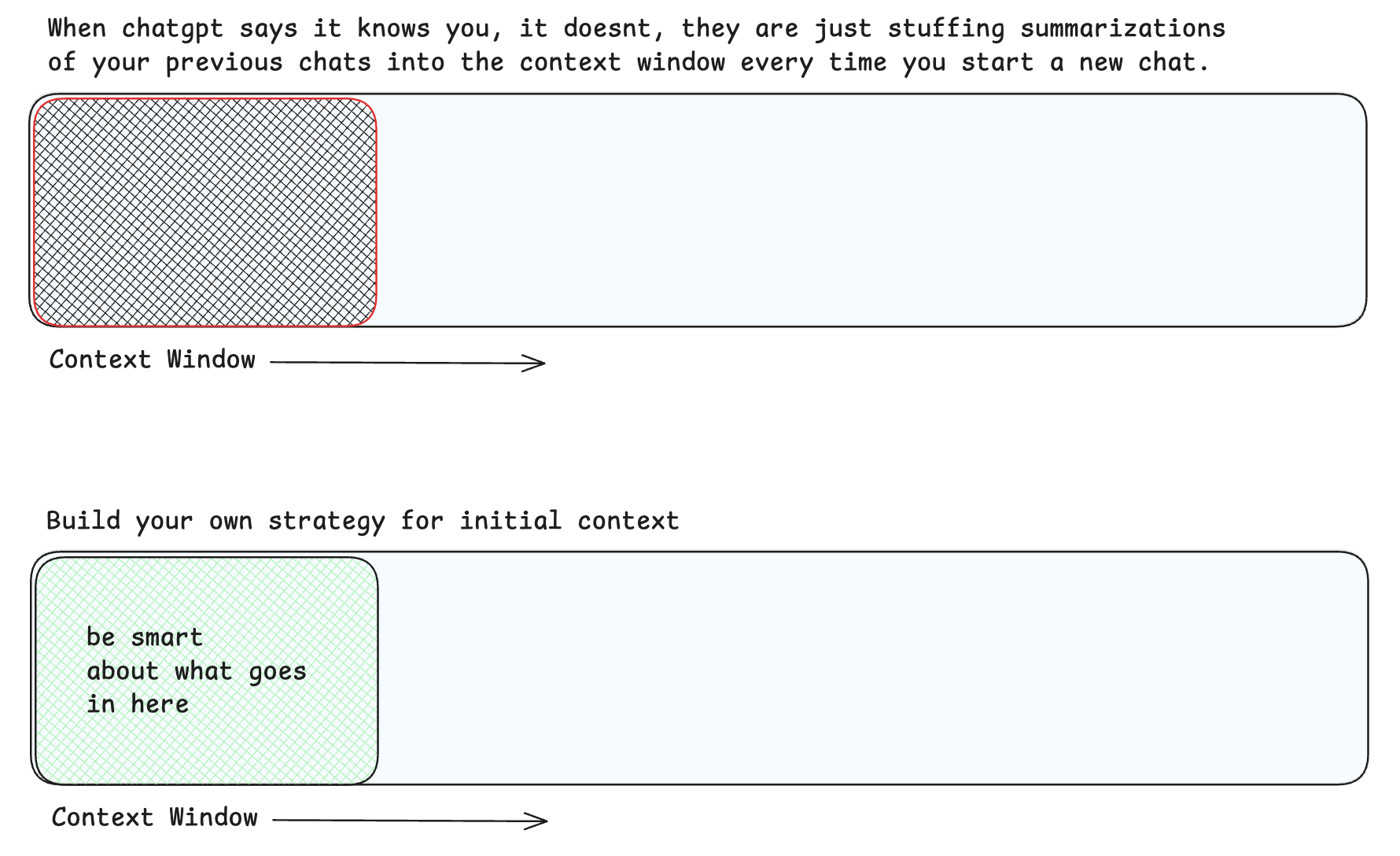
The Takeaway: You are Adam Sandler. Start every chat by explicitly telling Lucy exactly what she needs to know for this specific task. Make the intro count. Treat AI like Mr Meeseeks - use every new session for one and only one task.